
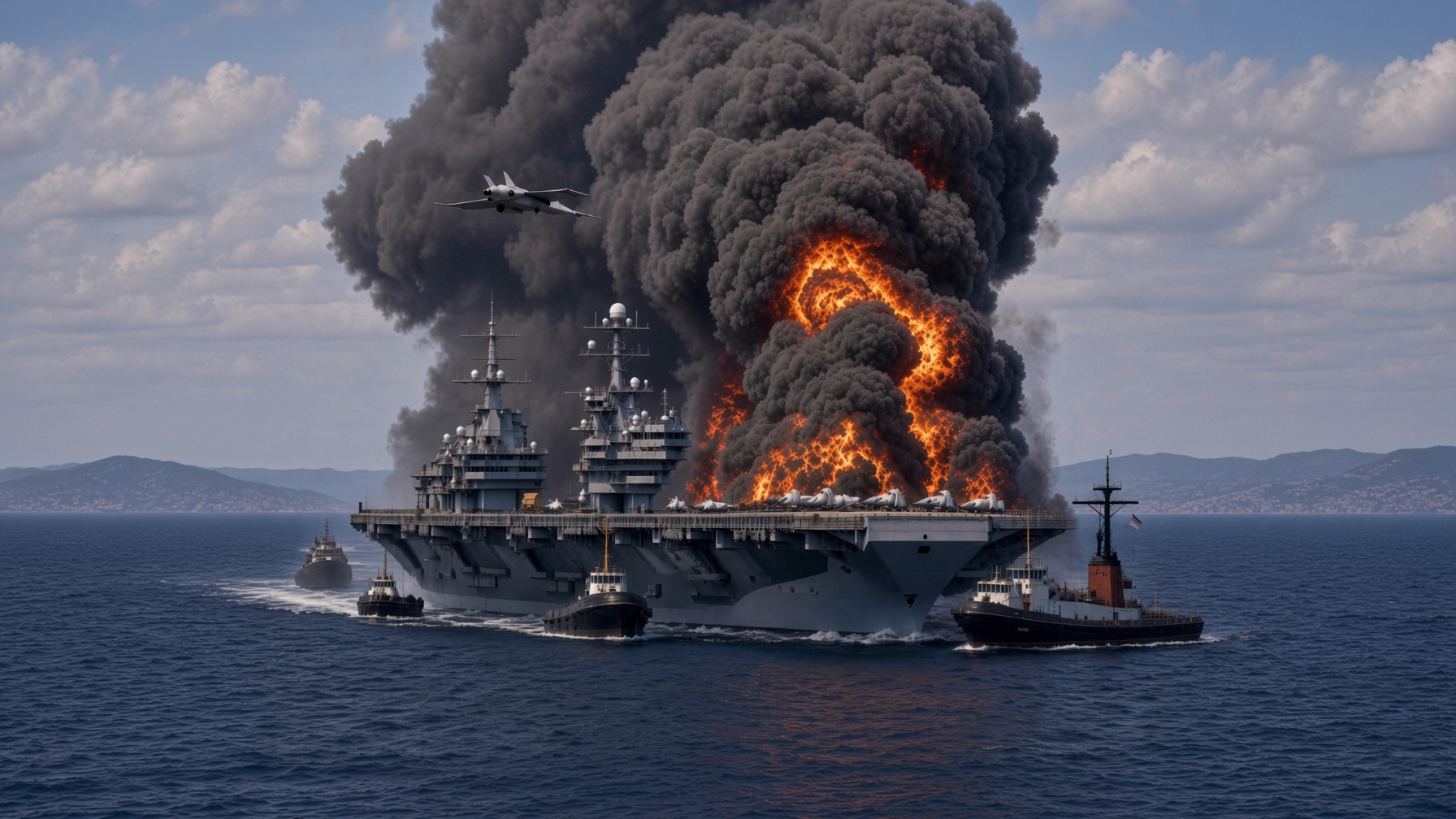
INTERNATIONAL — Reports of a potentially devastating strike against a heavily protected military vessel have triggered international attention and raised new questions about the vulnerabilities of even the most advanced defense systems.
According to claims circulating online, the reported attack unfolded with remarkable speed, allegedly allowing an incoming threat to pass through multiple layers of surveillance, tracking and defensive technology before reaching the high-value military target.
However, officials have not yet publicly provided independent confirmation of the incident, the identity of the vessel involved, the weapon reportedly used or the extent of any damage. As a result, key details remain uncertain, and claims circulating on social media should be treated cautiously until supported by credible evidence.
Questions Over How the Defenses Were Breached
Modern military vessels are typically equipped with sophisticated systems designed to detect and respond to incoming threats. These can include long-range radar, electronic warfare equipment, air-defense missiles, automated tracking systems and other protective technologies.
The alleged incident has consequently raised questions about how a fast-moving threat could potentially penetrate multiple defensive layers.
Defense systems, however, are not considered completely impenetrable. Their effectiveness can depend on numerous circumstances, including the speed and trajectory of an incoming weapon, the time available for detection, electronic interference, environmental conditions and the number of threats being encountered simultaneously.
A coordinated or unexpected attack can place additional pressure on defensive networks, particularly when operators have only seconds to identify and respond to an approaching threat.
Still, analysts caution that it would be premature to determine whether any specific defensive system failed without reliable information about what actually occurred.
Social Media Claims Add to Confusion
The lack of a detailed official account has allowed social media speculation to spread rapidly.
Videos, photographs and posts claiming to show explosions or severe damage have circulated across multiple platforms. Some accounts have presented the material as evidence of a major military strike, while others have questioned the authenticity, timing or origin of the footage.
During military conflicts, however, visual material can be difficult to verify. Old footage can be reposted as new, videos can be taken from unrelated incidents, and initial reports can contain incomplete or inaccurate information.
That uncertainty makes independent verification particularly important.
Unconfirmed claims involving military attacks can also have consequences beyond public discussion. Reports of damage to major military assets can affect financial markets, influence public perceptions and increase diplomatic tensions between governments.
What a Confirmed Strike Could Mean
If authorities eventually confirm that a heavily defended vessel was successfully struck, defense specialists would likely examine the incident in detail.
Investigators would seek to determine how the attacking system approached the target, when it was detected, what defensive measures were activated and whether electronic warfare or other technologies played a role.
The findings could contribute to broader discussions about the future of naval defense and military technology.
A successful attack could demonstrate the importance of factors such as speed, timing, electronic warfare, coordinated attacks or other emerging capabilities. It could also prompt military organizations to reassess how they protect high-value platforms against increasingly sophisticated threats.
Such an event could influence future investments in radar systems, missile defenses, electronic warfare, surveillance technology and other forms of force protection.
Major Questions Remain Unanswered
For now, several critical questions remain unresolved.
It is unclear exactly which vessel was allegedly targeted, what weapon or weapons were involved, whether the vessel suffered significant damage and whether anyone was killed or injured. It is also unclear whether the reported incident occurred as described or whether some of the information circulating online is inaccurate.
Until credible evidence becomes available, the reports should therefore remain classified as unconfirmed.
The situation nevertheless highlights a central challenge of modern warfare. Military powers can deploy increasingly sophisticated defensive systems, but technological superiority does not guarantee complete protection from attack.
As offensive weapons become faster, more precise and increasingly difficult to detect, military planners continue to face the challenge of protecting valuable assets against rapidly evolving threats.
For now, international attention remains focused on obtaining verified information about the reported strike. Any confirmed details could provide important insight into the capabilities of modern offensive and defensive systems—and potentially influence how militaries approach the protection of high-value assets in future conflicts.